


HOW TO SAVE ENERGY, MONEY AND WATER! 5 Simple Hot water system tips every homeowner should know.
Hot water systems use A LOT of energy. Around one quarter of the average Australian home’s energy use is chewed up by heating water! This is a big chunk of your electricity bills…especially in winter when the showers tend to get hotter and longer :S But there are a few simple things you can do to cut down on the energy your hot water system uses.
Hot water systems can be dangerous for obvious reasons. Regular servicing by a professional should be done at the same time you service you heating and/or AC unit – to ensure the correct function and longevity of the unit. However, it may be possible for you to adjust the thermostat on your own…
If your hot water system is running at a higher temperature than it needs to be, it's using more energy than it needs to — and you might be able to turn the thermostat down a little. Every hot water system is a little different, some will have a thermostat you can adjust without having to break out a screwdriver. Simply remove the access panel at the bottom and make sure the number on the dial isn’t set too high (or too low, because you don’t want to encourage any bacterial growth in your system). Remember if there is any warning signs- not to remove a panel, please call your plumber. Don’t risk it.
So…what temperature is the right one?
It depends on what system you have! Storage systems should be set at to 60degrees according to the Federal Government's Your Home sustainability guide. This is because you need at least 60 degrees Celsius to stop the growth of Legionella bacteria, any higher is just an unnecessary waste of energy. Instantaneous hot water systems (or continuous flow systems) don’t need to be set as high as they do not store water – 50 degrees Celsius will suffice.
Another tip is to have your pipes insulated! Adding insulation is cheap, its something that a good installer will include in your new installation…However, its defiantly worth adding if you don’t have it already…as it can save up to $185 a year from your energy bills according to the organisation's website. Heat loss from poorly insulated or uninsulated pipes can be significant.
Sustainability Victoria recommends closed-cell rubber insulation, but there will be a variety of options at your hardware store. Just be sure that the sleeve sits snugly, and it should be fixed into place with zip ties or duct tape. The first 2 metres of pipe coming from the hot water system are the most critical sections. If you’re unsure, don’t wish to crawl under the house, or think access is a problem give Alpine a call and we can take a look for you.
Maintain your system! As mentions above, you should service your hot water system. These units often get overlooked but should be serviced when you get your ducted heating or A/C system serviced. At Alpine Trade Group we have introduced a great program to our Melbourne and Yarra Valley clients that takes the hassle out of remembering to service your system. Ask one of our team about our Total care club.
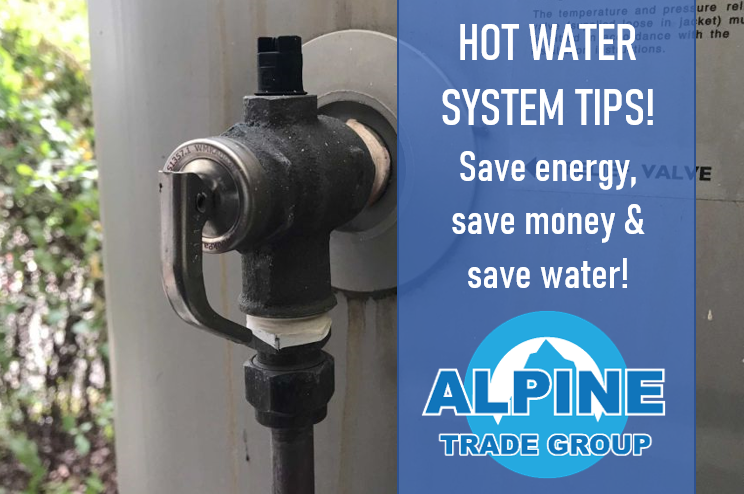
You can also give your storage system a hand by releasing the relief valve every 6 months. All you need to do is lift up the relief valve for about 10 seconds then put it down again. – this will help the longevity of the unit.
A storage tanks usually last between 10 and 15 years, while continuous flow units can last a little longer — roughly 15 to 20 years.
Be ready for your upgrade…
Hot water systems tend to keep ticking away…until one day, they don’t! This is why, even if everything is tickity boo, it’s a good idea to do a little research on hot water systems before you need to. A good idea is if your unit is approaching the 8-10-year mark, have a little think about what you might do when its time to replace it… Do you want to simply replace it, or upgrade…? Will you be better off going from a storage unit, to an instantaneous system…or should you choose a solar system?
A solar hot water system is the best option for long-term energy and financial savings because you're consuming less energy to heat your water. But everyone’s needs are different. Its just as important to match the hot water system to your household size and usage.
If there’s not many people in the house …a continuous system might be a good idea as your only heating the water you use. Storage tanks are more designed for a larger family…
Finally, using less hot water means your system needs to heat less water.
Understanding your water usage is important here… Most of us use over half our hot water in the bathroom! Installing efficient shower heads is probably the simplest and most important fact here (besides monitoring shower time). A showerhead with at least a three-star efficiency rating can reduce your shower time water usage by about half.
Roughly a third of your hot water use is used in the laundry! Use cold water as much as possible, including when you run your washing machine. (I Never knew that my favourite cycle heated the water, because I never paid attention until my mum pointed it out! All I do now is manually set it to cold water and boom! Still my favourite cycle…only better!)
The rest of the hot water usage is in the kitchen – If you have a dishwasher, sometimes it’s important to pre- rinse, but this can be done with cold water. Keeping mixer taps on the cold position when they're not in use. Mixer taps can increase hot water use as they mix hot and cold water together - If you do not need hot water or need it only for short uses, move the mixer tap to the cold position to avoid drawing down on your hot water system.
Of course, If you notice any drips, fix those as soon as you can!
.